
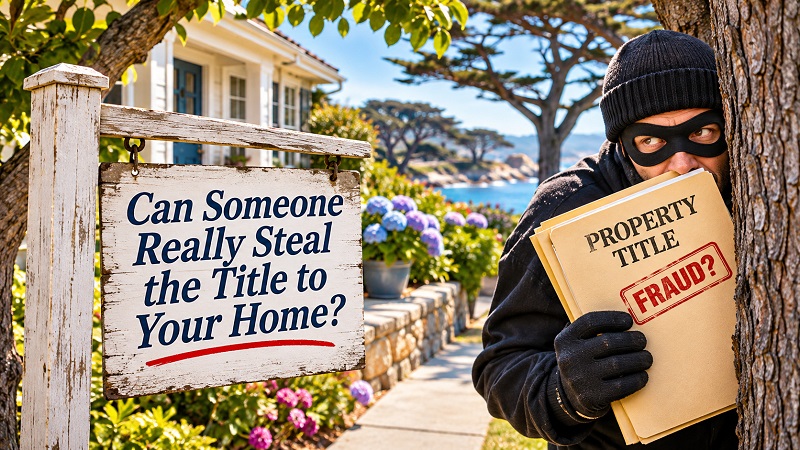
Home title theft commercials make it sound frighteningly easy for criminals to steal your house. But how serious is the threat, and do you really need to pay for title protection?
If you've watched television lately, you've probably seen advertisements warning that criminals can steal your home's title without your knowledge. Some even suggest that you could wake up one morning and discover that someone else owns your house.
It's an alarming thought, particularly for homeowners who have spent years building equity in their properties.
But before signing up for another monthly subscription, it's worth understanding what home title theft actually involves, how common the risk is, and what protections you may already have.
What Is Home Title Theft?
Home title theft, sometimes called deed fraud, occurs when someone fraudulently records a document claiming to transfer ownership of a property.
A criminal might obtain publicly available property records, forge an owner's signature on a deed, and attempt to record that document with the county recorder.
The criminal may then try to sell the property or borrow money against it.
While this type of fraud does happen, there is an important distinction that the commercials often overlook:
Recording a fraudulent deed does not automatically give someone legal ownership of your home.
A forged deed generally cannot legally transfer ownership. However, it can create a cloud on the property's title that may require legal action to resolve.
That can be expensive and frustrating, even when the legitimate homeowner ultimately prevails.
Is It Really That Easy to Steal a House?
Not nearly as easy as some advertisements suggest.
Real estate transactions involve several safeguards, including notarized documents, title searches, escrow procedures, and identity verification.
A criminal attempting to sell your home or obtain a mortgage against it would generally need to circumvent several of these protections.
If your property has an existing mortgage, there's another obstacle: your lender has a recorded lien against the property.
That lien doesn't prevent someone from recording a fraudulent deed, but it makes a fraudulent sale or financing transaction more complicated.
None of these protections is foolproof, but they make the process considerably more difficult than the commercials imply.
What Do Home Title Protection Companies Actually Do?
This is where homeowners should pay particular attention.
Despite their names, most home title protection services don't actually prevent someone from recording a fraudulent document.
Instead, they monitor public property records and notify subscribers when certain changes occur.
In other words, they generally provide an early warning system, not a title lock.
Some services also advertise assistance with resolving fraud, but the extent of that assistance varies by company and contract.
Before purchasing a subscription, homeowners should understand exactly what is covered and whether similar monitoring is available at no cost through their county.
What About Title Insurance?
Many homeowners purchased title insurance when they bought their property.
Traditional title insurance generally protects against certain title defects that existed before the policy was issued.
It does not necessarily cover a new fraudulent deed recorded years later.
Homeowners should review their owner's title insurance policy and any endorsements rather than assuming all future title fraud is covered.
Are Some Properties More Vulnerable?
Certain properties may present more attractive opportunities for fraudsters.
These can include:
- Vacant homes or properties that are rarely visited
- Second homes and vacation properties
- Properties owned free and clear, without a mortgage
- Properties involved in probate or estates
- Properties whose owners live far away
These circumstances don't mean that fraud is likely. They simply make it especially important to monitor ownership records and correspondence.
How Can California Homeowners Protect Themselves?
Fortunately, there are several practical steps homeowners can take without purchasing an expensive monitoring service.
Keep your mailing address current. Make sure your county assessor and recorder have accurate contact information, particularly if the property is a rental or second home.
Review your property records. Periodically check the county recorder's records for unfamiliar deeds, liens, or other documents.
Pay attention to unexpected notices. Unfamiliar mortgage correspondence, changes in property tax billing, or notices involving ownership should be investigated promptly.
Protect your identity. Secure personal information and consider freezing your credit with the major credit bureaus.
Use available county notification programs. California is expanding notification requirements for certain recorded real estate documents beginning in 2027. Check with your county recorder for available services and enrollment requirements.
If you discover a suspicious document, contact the county recorder, your title insurer, and a qualified real estate attorney promptly.
Should You Pay for Home Title Protection?
For most homeowners, purchasing a monthly title monitoring subscription is not necessarily the best use of their money.
Home title fraud is a legitimate concern, but the advertisements often exaggerate how easily someone can take legal ownership of a property.
Free or low-cost monitoring, attention to property records, and ordinary identity protection may provide sufficient peace of mind for many homeowners.
The important thing is to understand the difference between preventing fraud, discovering fraud, and resolving fraud after it occurs.
The Bottom Line
Home title theft is possible, but having a fraudulent deed recorded against your property is not the same as losing legal ownership of your home.
The risk deserves awareness, not panic.
At Monterey Bay Property Management, we believe informed property owners make better decisions. Whether you own your primary residence, an investment property, or a vacation home, understanding potential risks is an important part of protecting your real estate investment.
Monterey Bay Property Management
Serving property owners throughout the Monterey Peninsula and surrounding communities.
This article provides general information and is not intended as legal or insurance advice.